Trauma and relationships — why closeness can feel unsafe

Trauma and relationships — why closeness can feel unsafe

Many people long for closeness while also feeling anxious, guarded, ashamed, overwhelmed, or withdrawn in relationship. This article explores how trauma and relational wounding can shape patterns of contact, distance, mistrust, and longing, and why these patterns often make sense.

Read More

Functional collapse: when you look fine but feel shut down inside

Functional collapse: when you look fine but feel shut down inside

Functional collapse can be hard to recognise because, from the outside, life may still appear to be moving. You may still be working, replying, caring for others, and appearing composed — while inside you feel numb, foggy, depleted, or shut down.

This article explores functional collapse as a protective response rather than a personal failing: when the nervous system has carried too much for too long and begins to conserve energy by reducing feeling, contact, and responsiveness.

Read More

DBR and Mindfulness: Similar Attention, Different Clinical Purpose

DBR and Mindfulness: Similar Attention, Different Clinical Purpose

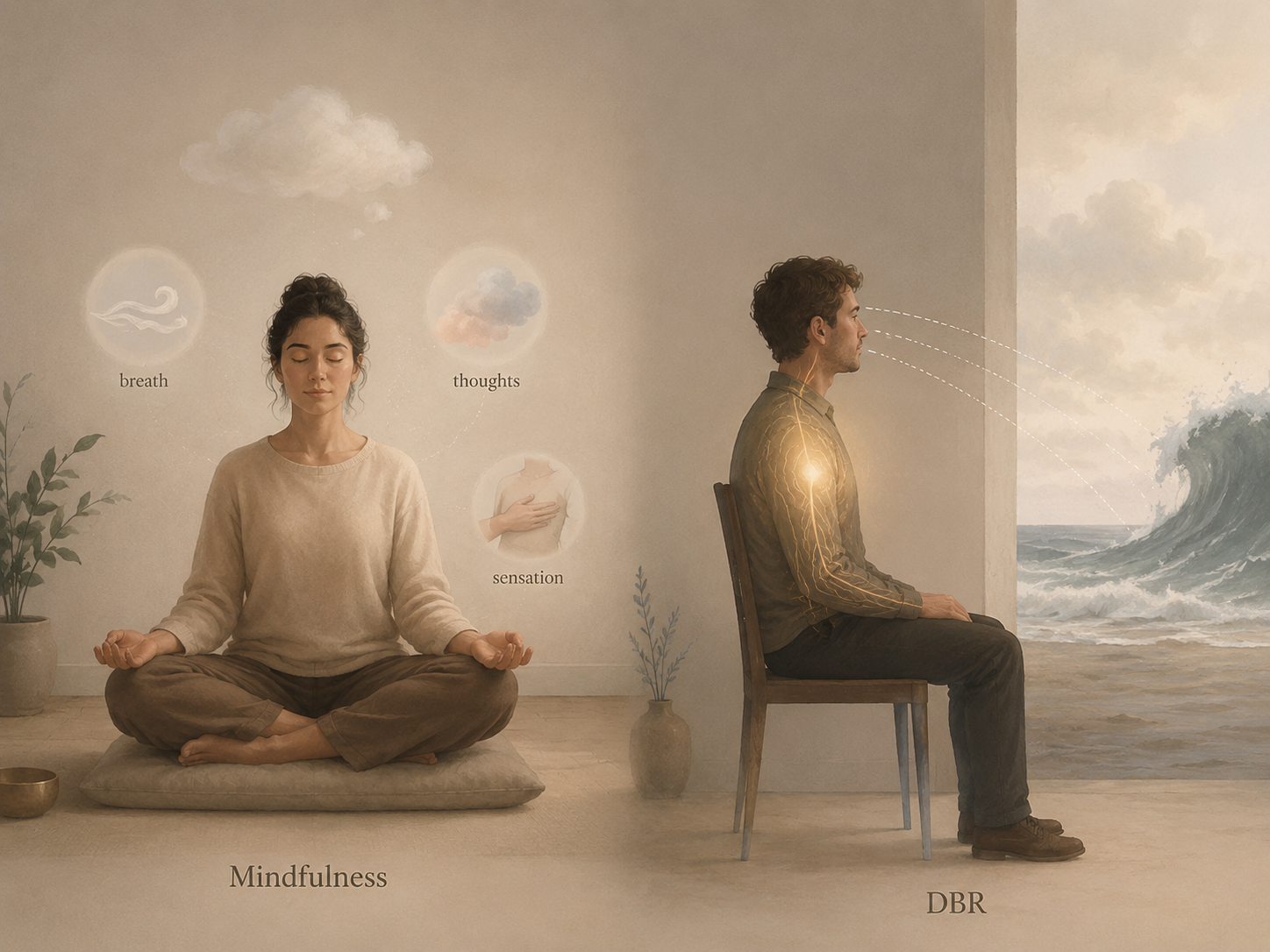
DBR and mindfulness both involve careful attention, but they use attention differently. Mindfulness listens to what emerges in present-moment experience. DBR works earlier in the nervous system sequence, close to where orienting and shock first arise.

Read More

What shutdown, freeze, or collapse can feel like — and why it happens

What shutdown, freeze, or collapse can feel like — and why it happens

Not all trauma responses look like panic or agitation. Sometimes the system goes quiet, heavy, numb, foggy, or flat. This article explores what shutdown, freeze, and collapse can feel like, why they happen, and why these responses often make sense in the context of overwhelm or chronic strain.

Read More

Deep Brain Reorienting (DBR): benefits, side effects, and what they mean in practice

Deep Brain Reorienting (DBR): benefits, side effects, and what they mean in practice

Deep Brain Reorienting (DBR) can support trauma processing, regulation, and reduced reactivity, but it may also bring temporary side effects. This article offers a balanced overview of benefits, possible after-effects, pacing, and integration.

Read More