
Couple therapy in Reading and online
When the relationship feels stuck in a familiar pattern
Couple psychotherapy for relationships that feel strained, distant, painful, or caught in repeated patterns that are difficult to shift.
Sessions are available in person in Shinfield, Reading, Berkshire, and online.

Relationship difficulties often affect far more than the relationship itself. They can shape how safe it feels to be close, how easily you can speak honestly, how conflict unfolds, and whether trust, belonging, or repair feel possible.
You may feel:
distant or misunderstood
guarded or emotionally disconnected
quick to withdraw or shut down
driven to pursue reassurance or clarity
caught between wanting closeness and needing protection
My approach is relational and trauma-informed, with close attention to:
attachment patterns
emotional regulation
nervous-system responses
recurring relationship dynamics that make connection difficult
This may be for you if
You may recognise that:
the same conflict keeps returning without real resolution
one of you tends to pursue while the other withdraws
attempts to speak honestly quickly become tense, defensive, or overwhelming
closeness, intimacy, trust, or repair has become harder to reach
old hurts continue to shape the relationship now
Couple therapy can help when both people want to understand what is happening between them, even if they are not yet sure what can change.
A first conversation can help you find a starting point
You do not need to know exactly what the pattern is before getting in touch.
A free 20-minute consultation gives us a chance to discuss:
what has been happening
what you are hoping for
whether couple therapy feels like an appropriate place to begin
Where possible, it is helpful for both partners to attend this initial conversation so I can hear briefly from each of you and begin to understand whether this way of working may be a good fit.
There is no pressure to continue beyond the consultation.
The pattern you may be caught in
Couples often come for therapy not because they do not care about each other, but because the same pattern keeps taking over.
You may find yourselves:
having the same argument in different forms
struggling to feel heard
withdrawing from each other
becoming defensive
feeling unable to reach one another when things become tense
A common dynamic is that one person pushes for contact, clarity, or reassurance while the other pulls away, shuts down, or feels overwhelmed.
Although both responses often make sense, together they can create a cycle that leaves both people feeling:
alone
hurt
frustrated
misunderstood
Couple therapy offers a space to slow this pattern down and understand what is happening underneath it.
What sessions focus on
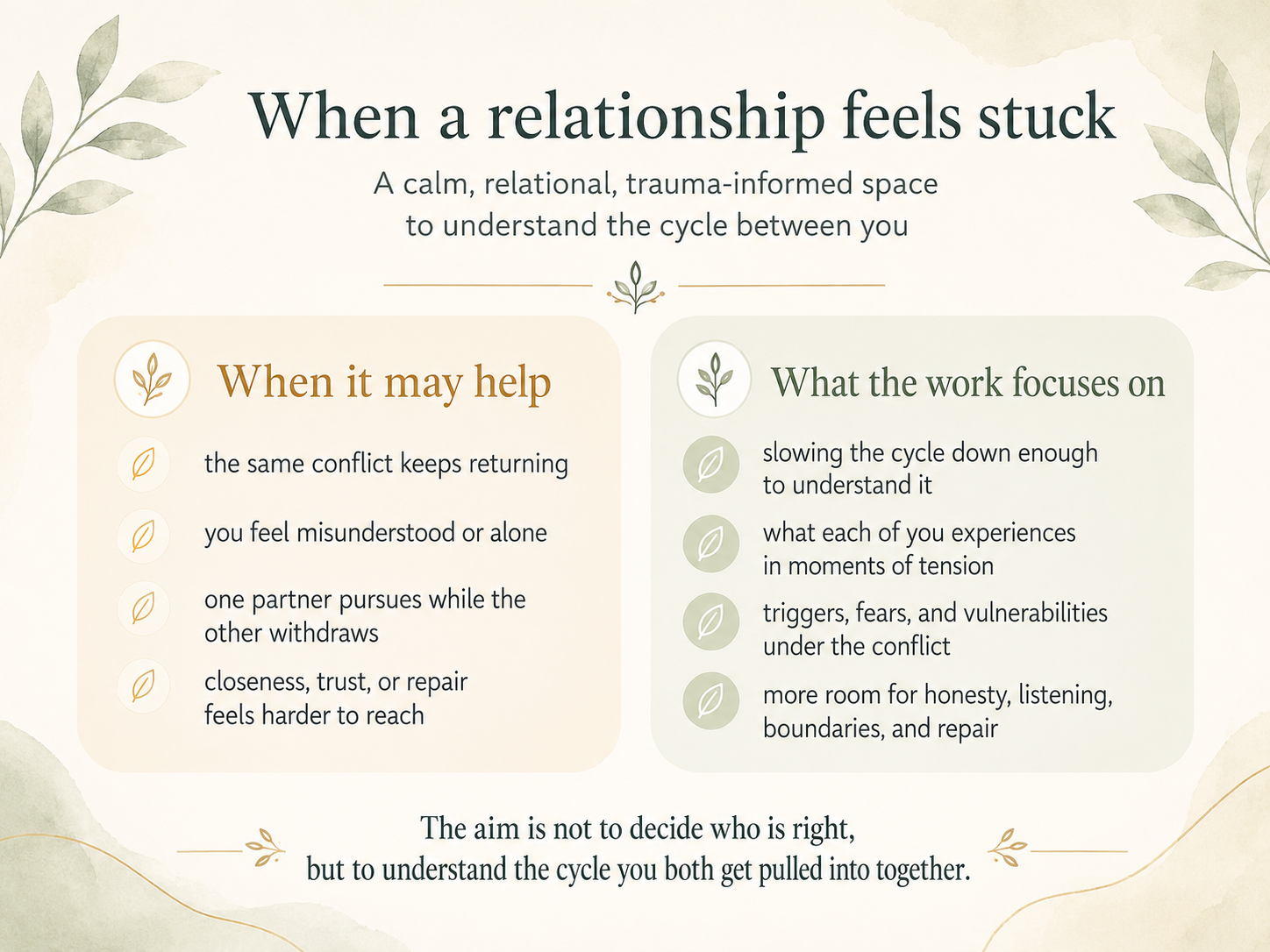
The focus is not on deciding who is right.
Instead, we work to understand the cycle you become caught in together and what each of you experiences when that cycle begins.
In sessions, we may explore:
what happens between you during moments of tension
what triggers defensiveness, anger, withdrawal, shutdown, or pursuit
what each of you may be protecting
fears, longings, or vulnerabilities beneath the visible conflict
how earlier experiences or attachment patterns may influence the present
what helps create more room for honesty, listening, boundaries, and repair
The aim is not perfect communication.
The aim is to help the relationship become:
more understandable
less reactive
more emotionally connected
more capable of repair and care
What may become possible over time
As therapy progresses, you may feel less trapped in familiar cycles and more able to respond to one another differently.
Possible outcomes include:
recognising the pattern earlier
reducing blame and increasing mutual understanding
communicating with more clarity and less escalation
creating more space for vulnerability without overwhelm
rebuilding trust where repair is possible
making thoughtful decisions about the future of the relationship
Where old trauma, attachment patterns, or protective responses become activated, relationships can quickly feel tense, guarded, or painful.
The work is to slow these processes down, understand them, and create more room for steadiness, honesty, care, and repair.
How I work with couples
My way of working is relational, attachment-informed, and trauma-informed.
I pay attention not only to what is said, but also to what happens between you when:
tension rises
closeness feels difficult
misunderstandings occur
repair breaks down
Sessions are carefully paced. Emotional safety is important.
The aim is not to force disclosure, intensify blame, or push either partner into emotional exposure before there is enough steadiness.
Where appropriate, sessions may include practical attention to:
communication
boundaries
emotional regulation
repair after conflict
These are held within a wider relational process rather than used as techniques in isolation.
If you would like a clearer sense of the wider approaches that inform my work, you can read more here:
When couple work may not be the right starting point
Couple therapy requires a genuine willingness to engage from both people.
It is not mediation, and it is not about establishing who is right.
If one partner is significantly uncertain about whether they want to take part, that is worth discussing before we begin.
Couple therapy may also not be the right first step where the immediate priority is crisis support, individual stabilisation, addiction support, safeguarding, legal advice, or specialist domestic abuse support.
Where there has been an affair, betrayal, secrecy, or a major rupture, couple therapy may still be possible, but the work needs careful contracting around honesty, safety, and what each person is ready to engage with.
Important
I do not offer couple therapy where there is:
ongoing domestic abuse
coercive control
intimidation
fear within the relationship
threats, violence, or pressure to attend
In these situations, the priority is safety, specialist support, and careful individual advice rather than couple therapy.
Practicalities
Sessions are available in person in Shinfield, Reading, Berkshire, and online via Zoom.
Sessions are usually 50 minutes.
Longer sessions may be arranged where clinically appropriate.
Where longer sessions are agreed, they are charged proportionally, based on the applicable fee for a 50-minute session.
The format depends on what is clinically appropriate.
For current fees and practical arrangements, please see:
For common questions about starting therapy and what to expect, you may also find the FAQ helpful.
If you are considering couple therapy
If something between you feels:
painful
distant
stuck
difficult to repair
a free 20-minute consultation can help us think about whether couple therapy may be an appropriate place to begin.
There is no pressure to continue.